
Criminal Defense
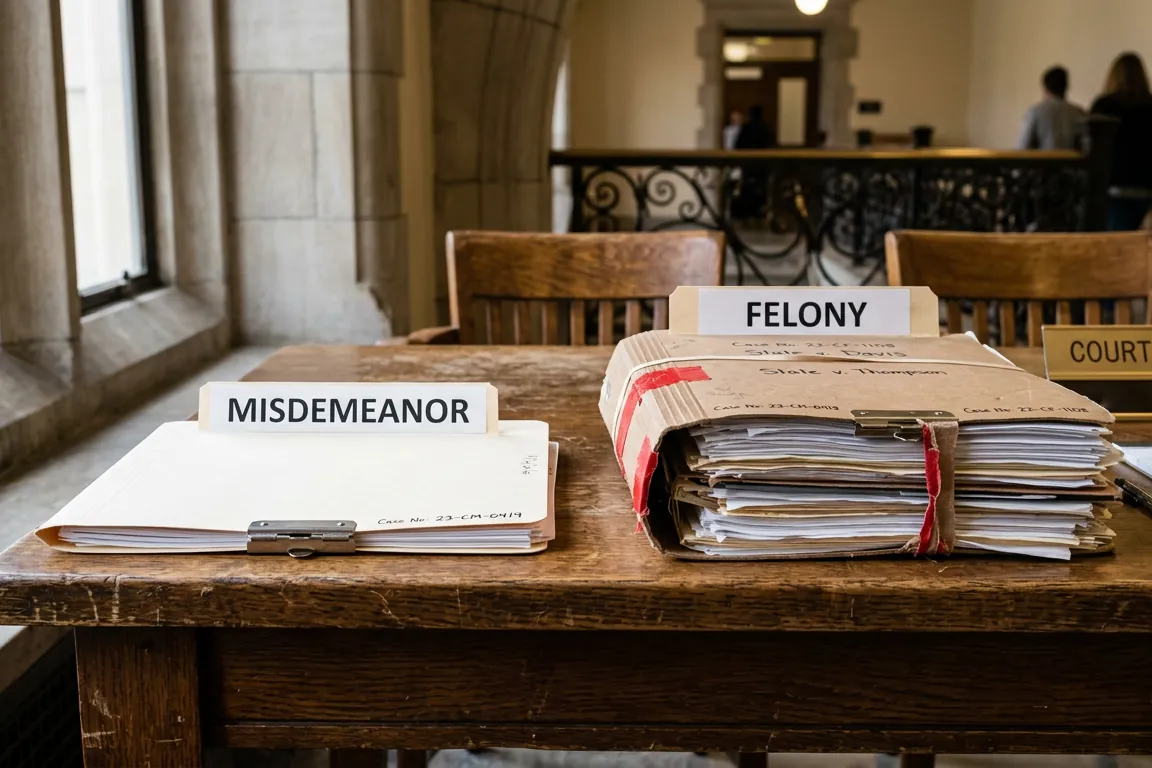
Two people can be arrested for conduct that sounds nearly identical and end up in completely different systems — one facing a misdemeanor, the other a felony. The classification isn't just a label. It determines where the case is heard, how much exposure a person faces, how the record follows them afterward, and even which rights are lost going forward.
How California Defines a Felony
Under Penal Code § 17(a)[1], a felony is any crime punishable by death, by imprisonment in state prison, or, since California's realignment reforms, by a term served in county jail under Penal Code § 1170(h)[2]. Felonies represent the most serious tier of criminal conduct under California law.
How California Defines a Misdemeanor
A misdemeanor, by contrast, is generally punishable by county jail time not exceeding one year, a fine, or both, and falls below the felony threshold. Some conduct is classified by statute specifically as a misdemeanor, while other statutes classify certain low-level violations as infractions under Penal Code § 19.6[3] and § 19.8[4], which typically don't carry any jail exposure at all and are punished by fine only.

Wobblers: When a Crime Could Go Either Way
Many California statutes are written as "wobblers" — offenses that can be charged as either a felony or a misdemeanor, depending on the specific facts, the defendant's criminal history, and prosecutorial discretion. Penal Code § 17(b)[1] governs how and when a wobbler that was initially charged or sentenced as a felony can later be reduced to a misdemeanor — including at sentencing, through a grant of probation, or in some cases through a later petition to the court. Because a wobbler's ultimate classification isn't fixed from the moment of arrest, how the case is handled early on can directly affect which way it ultimately resolves.
Why the Classification Changes the Entire Process
- Custody exposure. A misdemeanor's jail exposure caps out at one year in county jail; a felony can mean years in state prison or a much longer county jail term under realignment.
- Court procedure. A felony case generally proceeds through a preliminary hearing, where a judge must find probable cause before the case moves forward, followed by a second, formal arraignment — a step a misdemeanor case doesn't go through.
- Firearm rights. A felony conviction results in a lifetime firearm prohibition under Penal Code § 29800[5], a consequence most misdemeanors don't carry (with certain specific exceptions).
- Record and disclosure. A felony conviction shows differently on background checks than a misdemeanor and can affect professional licensing, immigration status, and other collateral consequences well beyond the sentence itself.
- Future charges. A prior felony conviction can enhance the classification or sentencing exposure of a later offense in ways a prior misdemeanor typically doesn't.
Who Decides the Charge
The initial charging decision belongs to the prosecuting agency — typically the district attorney's office — based on the police report, the specific statute violated, and the person's criminal history. For a wobbler, that decision isn't necessarily final; it can be revisited by the court at sentencing or, in some circumstances, through a later petition under Penal Code 17(b).
What This Means in Practice
Because the classification drives so much of what follows — custody exposure, the court process itself, and the long-term record — understanding whether a charge is a straight felony, a straight misdemeanor, or a wobbler that could go either way is often one of the first and most important things to sort out in any criminal case.

Infractions: The Third, Smaller Category
Below both felonies and misdemeanors sits the infraction — the least serious classification under California law. Infractions, defined in Penal Code 19.6 and 19.8, generally don't carry any jail exposure and don't entitle a defendant to a jury trial or court-appointed counsel in the same way a misdemeanor or felony does. Most traffic tickets fall into this category, though certain traffic-related conduct, like DUI, is charged well above the infraction level.
Questions about your case? Call (323) 622-4951. Free, confidential, 24/7.
How a Wobbler Gets Decided in Practice
When a statute allows for either felony or misdemeanor treatment, the initial charging decision often reflects factors like the severity of the specific conduct, whether anyone was injured, the amount of loss or harm involved, and the defendant's criminal history. Even after an initial felony filing, the same wobbler statute allows the court to treat the offense as a misdemeanor at various points — including as part of a negotiated resolution, at sentencing, or in some cases through a later petition once probation or a sentence has been completed. This flexibility is one of the more significant ways a case's outcome can shift over time, and it's why the initial charge on the police report doesn't necessarily reflect how the case will resolve.
Why the Felony/Misdemeanor Line Also Affects Sentencing Alternatives
Beyond the maximum exposure, the classification affects which sentencing alternatives are realistically available — including formal versus informal probation, eligibility for certain diversion programs, and how prior convictions factor into any future case. A misdemeanor conviction and a felony conviction for arguably similar underlying conduct can lead to very different practical outcomes for years afterward.
Frequently Asked Questions
Can a felony ever become a misdemeanor later?
If the underlying offense is a wobbler, yes — Penal Code 17(b) allows for reduction at sentencing, as a condition of probation, or in some circumstances through a later petition to the court.
Do all felonies involve a preliminary hearing?
Generally, yes — felony cases proceed through a preliminary hearing where a judge determines whether probable cause supports moving forward, a step that misdemeanor cases skip.
Is jail time the only difference between the two?
No. Beyond custody exposure, the classification affects firearm rights, how the case moves through court, and how the conviction appears on a record for years afterward.
Questions about your case? Call (323) 622-4951. Free, confidential, 24/7.
Not Sure Whether You're Facing a Misdemeanor or a Felony?
The classification shapes nearly every decision that follows, and for a wobbler, that classification isn't necessarily set in stone. The Cespedes Law Firm, L.C. is headquartered in Chino Hills and represents clients in English and Spanish throughout California. Call (323) 622-4951 for a free consultation.
This article is general information about California law, not legal advice. Every case turns on its own facts; contact our office to discuss yours.